3 Foundations of My Creative Process: Therapeutic Art Exercises That Bring Calm
For years, I’ve explored how the simple act of making art can quiet the mind. In my earlier work as a coach, I shared these tools as exercises for others. Today, as a professional artist, these practices have evolved into something deeper: they are the sacred rituals I use to clear the noise before I ever touch a brush to canvas.
When you see a finished landscape in my shop, it is the result of this intentionality. Below are the three foundational ways I "find the center" in my studio. Whether you use these as a contemplative practice for yourself or simply want to understand the energy behind my work, I hope they bring you a moment of breath.
1. The Color of the Day: Distilling Emotion
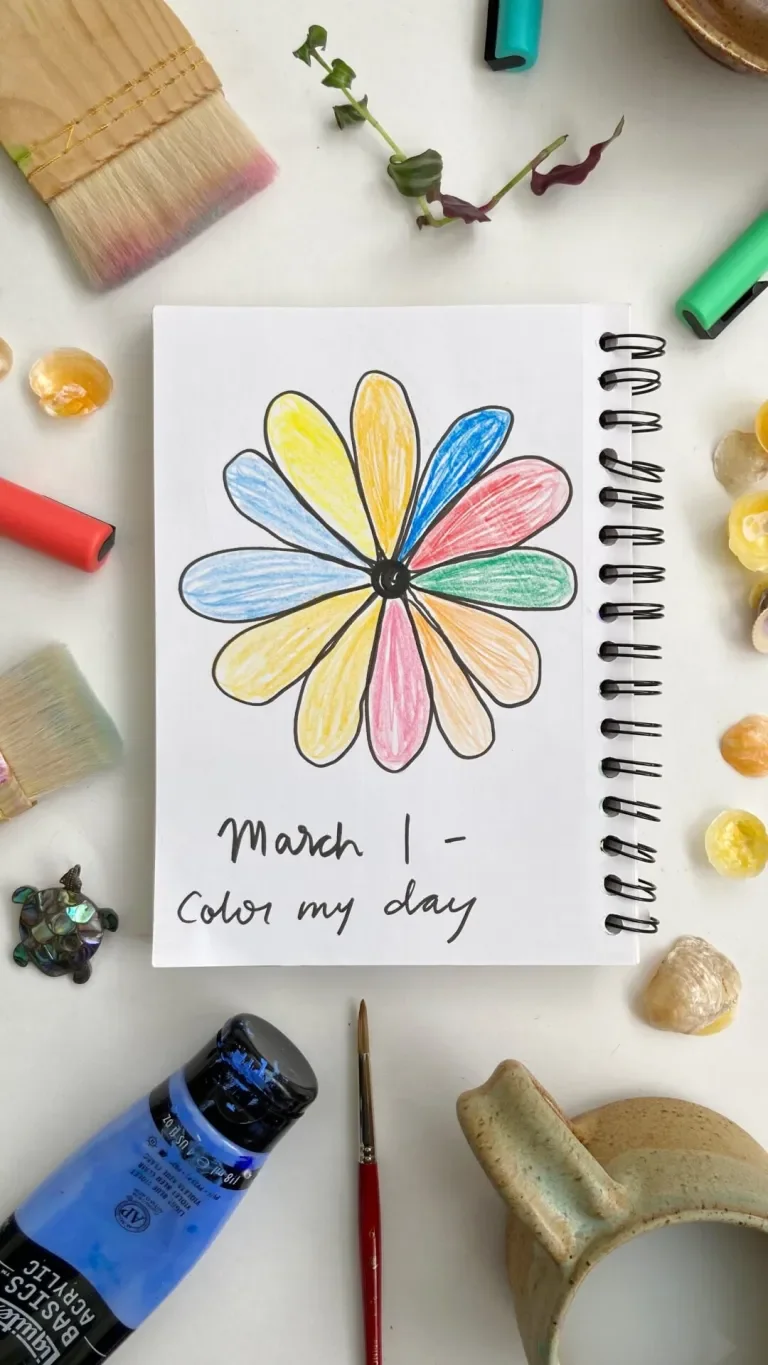
In my studio, I use color as a language for emotion rather than just a visual choice. Before I begin a large-scale piece, I often assign a color to the most prominent feeling of my morning—mapping out the "clock" of my internal state.
A twelve-petaled flower is a perfect distillation of this process, entering a color for my mood for each hour or chunk of the day. It helps me look back over my time and to see the ebb and flow of my moods.
By distilling these emotions onto paper first, I ensure that the final paintings I offer you are created from a place of clarity, not chaos. When you hang a piece of my work, you are receiving the end result of this emotional filtration—a palette chosen with presence.
2. Landscapes of Gratitude: The Architecture of the Horizon
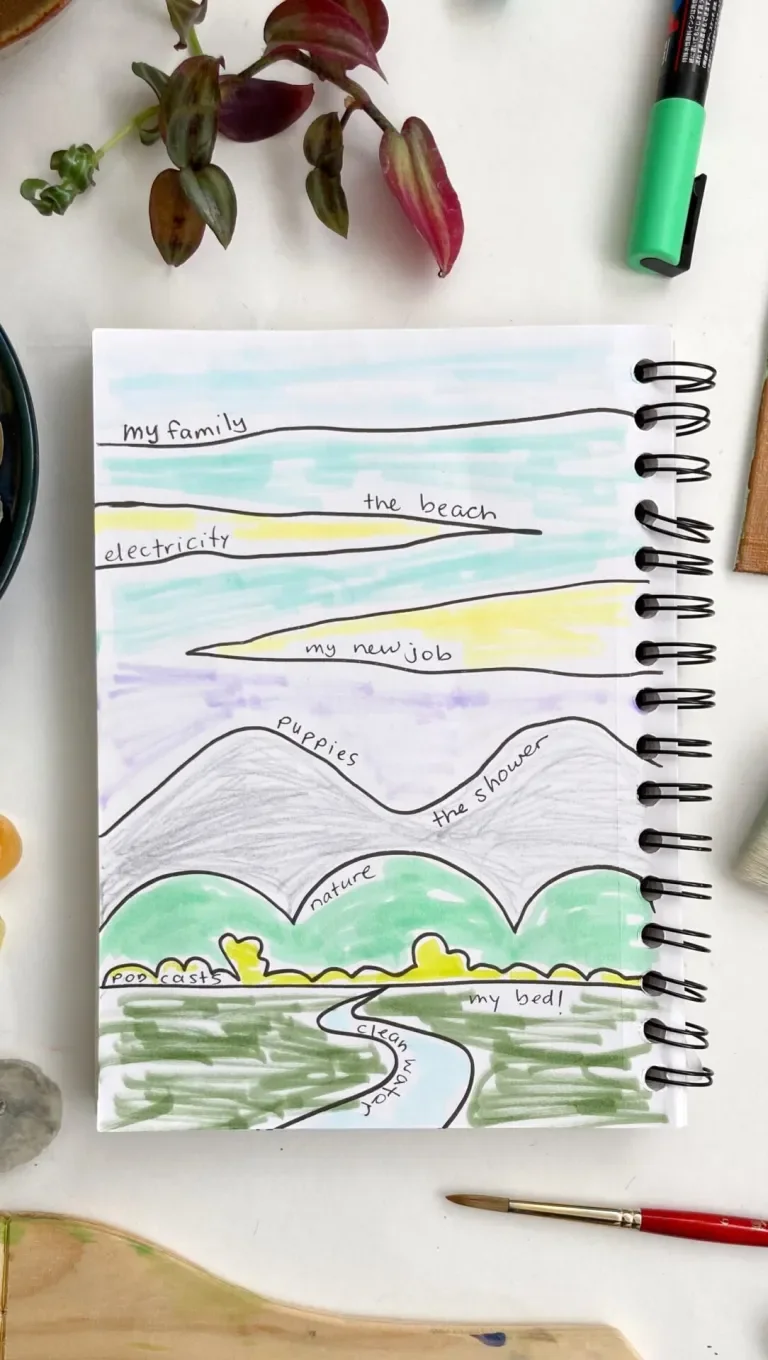
My torn-paper landscapes are more than just scenery; they are records of gratitude. I believe that when we focus on the horizon, our perspective naturally shifts from the immediate and stressful to the expansive and hopeful.
In my practice, I "build" my landscapes by assigning specific gratitudes to the clouds, the mountains, and the sky. This practice allows me to infuse every mountain and sky I paint with a sense of grounded appreciation. Every layer of torn paper represents a layer of "thank you."
However, sometimes it’s enjoyable to sketch out a quick and playful landscape, labeling each element as something I’m grateful for. It’s a visual reminder of the abundance of nature and life itself.
3. Floating the Noise: Creating a Sanctuary
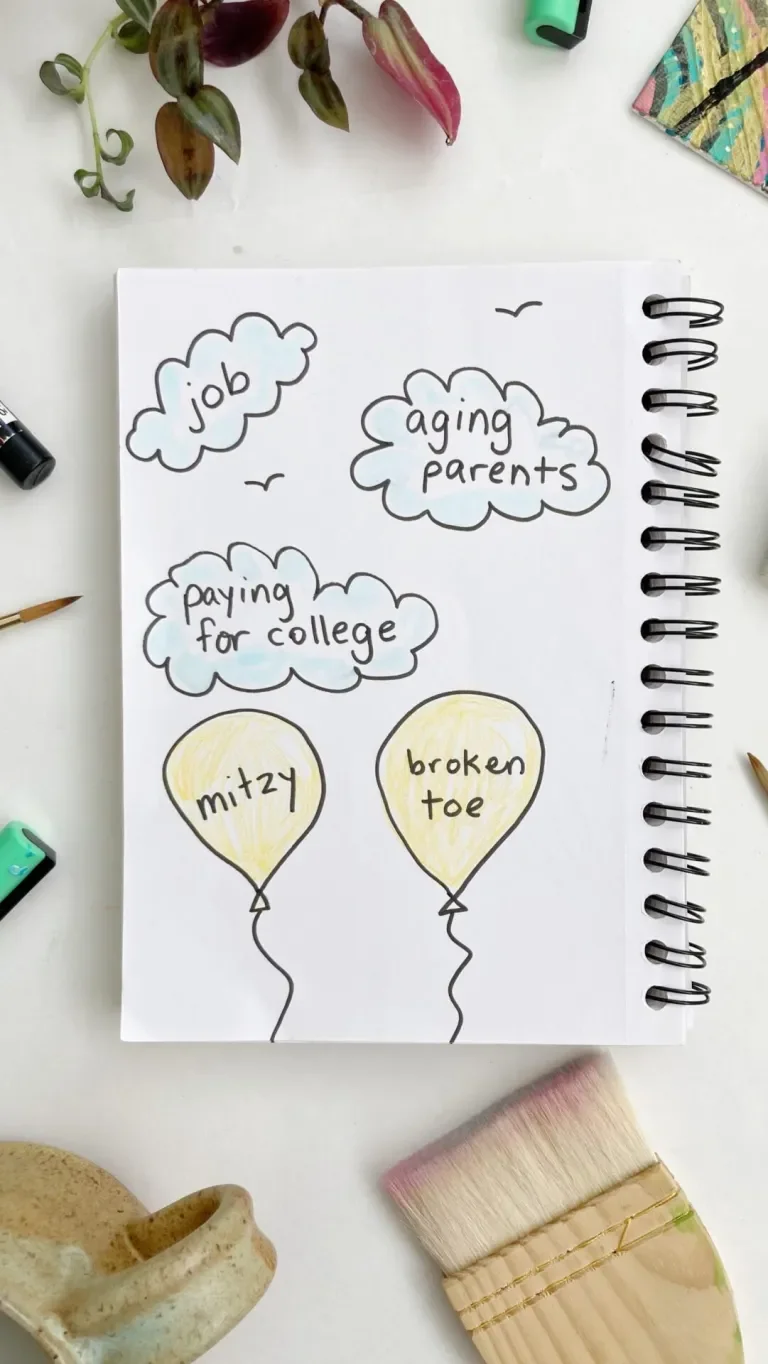
To create art that serves as a "deep breath" for your walls, I have to let go of my own stressors first. Before a session, I often visualize my distractions and stressors as weightless objects, floating away from the studio space.
This ritual ensures that my baggage stays outside the frame. My goal is for you to bring my work into your home and feel only the peace, the stillness, and the quiet joy I’ve invited into the studio.
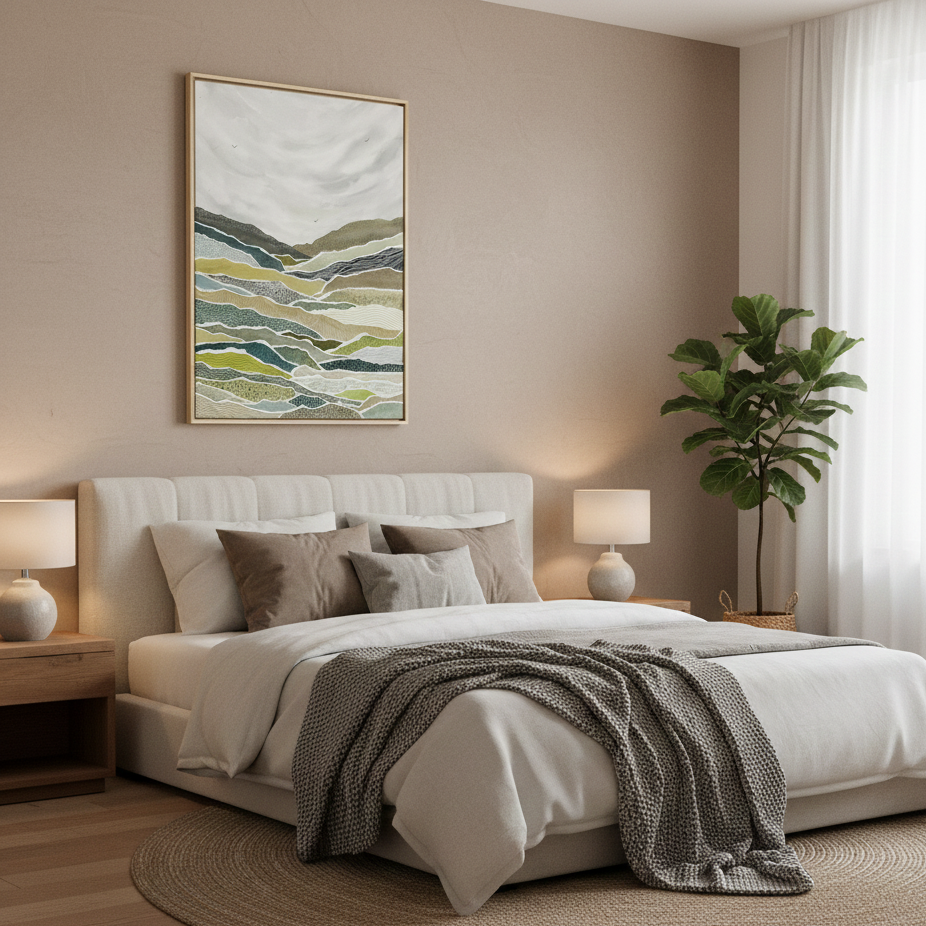
Stop Guessing: Use the 60-Second Body Compass to Create Your Personal Sanctuary
Feeling overwhelmed by the noise of the world? Download this guide to learn the Body Compass, a simple physical exercise to help you instantly identify what brings you peace and what drains your energy (it can help you decorate your space!)
P.S. When you sign up, you'll also receive 10% off your first purchase.